100% Wool Yarn for Your Historic Projects
I’m a knitter and a historian, so when I knit an item using a vintage pattern it just doesn’t make sense for me to use anything but wool that is as historically accurate as possible for the period
I am representing. Unable to find exactly the sort of yarn I wanted, I made my own.
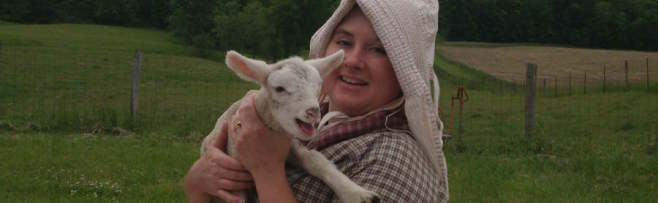
I raise historic breeds of sheep, mostly merino, with a few cheviot-merino crosses. The sheep are raised on my small farm using 19th century farming methods whenever possible. The wool is processed on a mill made early in the 20th century that uses the
same milling methods that have been in use since the 1760s. Then the wool is wound by hand into traditional skeins and labeled with a unique label with a
picture of the sheep that helped to create the yarn.
The purpose of this website is to help you find the most historically correct wool yarn for your particular period of history. You’ll learn how my sheep are
raised and how it differs from a modern sheep operation, how to choose the color of your yarn based on the historical period you’re representing, and how to
determine how much wool you’ll need for your project. You can place an internet order, visit a local yarn shop that carries my yarn, or view my schedule of events so that you can purchase your yarn in person (and talk sheep with
me!).
Whether you are a living history interpreter or reenactor portraying the 18th, 19th or early 20th century, a staff member or volunteer demonstrating at a museum or historic site, or if you just want
to fully experience a simple part of our foremothers' daily life, my yarn will make your work much more historically accurate.
Thank you for visiting my website!
Wear wool,
Suzy the Shepherdess
Suzy Beggin Craft
Suzy@SuzyTheShepherdess.com
"Buy your wooolen yarns in quantities from some one in the country, whom you can trust."
Lydia Maria Child
The American Frugal Housewife, 1832
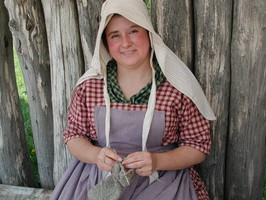 Suzy the Shepherdess knitting a wool sock at the Apple River Fort (1832)
Contact Details
Suzy the Shepherdess
Suzy Beggin Craft
P.O. Box 54
Stockton, IL 61085 U.S.A.
Phone: 815 541-0897
Email: Suzy@SuzytheShepherdess.com
 Print
Print 